


Table of Contents
- Why Wine Pairings Matter for Your Dinner Party
- How Much Wine Per Person for a Dinner Party
- Wine Pairing Guide for Italian Food
- Best Australian Wines for Dinner Parties
- Matching Wines to Your Menu Structure
- Common Mistakes to Avoid When Selecting Wines
- Elevating Your Dinner Party with Professional Catering
- Frequently Asked Questions
Last Updated: September 29, 2026
Why Wine Pairings Matter for Your Dinner Party
Getting the best wine pairings for casual dinner parties right transforms a casual dinner into something memorable. The difference between a bottle that complements your food and one that clashes is the difference between guests lingering at the table and checking their watches. When you’re hosting in Sydney, where entertaining at home has become the preferred alternative to crowded restaurants, this detail matters more than ever.
Wine pairing isn’t about rigid rules or pretension. It’s about understanding a few core principles that make food taste better and wine taste better. A crisp white wine cuts through richness in a way that a heavy red never will. A structured red wine with tannins stands up to grilled meat in a way that a delicate white cannot. Get these fundamentals right, and your guests will taste the difference, even if they can’t articulate why.
At The Italian Table, we’ve spent over 25 years crafting dining experiences where wine selection is treated as seriously as the food itself. When you’re pairing wines for a casual dinner party, you’re solving a simple problem: what amplifies the flavours on the plate rather than fighting them? This guide walks you through exactly how to do that.
How Much Wine Per Person for a Dinner Party
The standard guideline is roughly 150 millilitres of wine per person for a three-hour dinner party. That’s one standard pour, a glass that’s one-third to one-half full. If your guests are wine enthusiasts or the evening extends beyond three hours, plan for 200 millilitres per person.
This assumes a mixed crowd where not everyone drinks wine at the same rate. Some guests will nurse a single glass. Others will have two or three. The 150ml baseline accounts for that variation.
For a 10-person dinner party, you’re looking at approximately 1.5 litres total, roughly two standard bottles. For 20 people, three to four bottles. These figures assume you’re serving one primary wine with the main course, plus perhaps a sparkling option for aperitifs.
A practical tip: buy one extra bottle. An open bottle that goes unfinished is far less awkward than running short mid-evening. You can always save it for the next gathering, and Australian wines in particular age gracefully over a few weeks once opened if stored properly.
Wine Pairing Guide for Italian Food
Italian cuisine is deceptively forgiving when it comes to wine. The food isn’t designed to showcase a single wine, it’s designed to be enjoyed with whatever wine is at hand. That said, certain combinations create a natural harmony that elevates both the wine and the dish.
White Wines for Seafood and Light Pasta
Seafood and delicate pasta dishes demand wines with acidity and restraint. A heavy, oaked wine will overpower a simple pasta alle vongole or a plate of fresh prawns. What you want is brightness.
Sauvignon Blanc is the workhorse here. The high acidity cuts through the salt in seafood and the richness of butter-based sauces. Citrus and herbaceous notes mirror the lemon and fresh herbs that typically finish these dishes. Sauvignon Blanc is easy to find across Sydney bottle shops and consistently crowd-pleasing at casual gatherings.
Chardonnay, particularly unoaked styles, works beautifully with richer pasta dishes, think creamy carbonara or seafood in a butter sauce. Oaked Chardonnay adds a subtle vanilla and hazelnut complexity that complements roasted chicken or seafood prepared with cream. The texture is fuller than Sauvignon Blanc, which means it won’t disappear next to heavier sauces.
Albariño is gaining traction in Sydney as an alternative to Sauvignon Blanc. It offers similar high acidity with stone fruit and citrus notes, but with slightly more body. For casual dinner parties featuring fresh summer seafood, Albariño delivers a “wow” factor without the pretension of more expensive whites.
For aperitifs or lighter starters, a dry sparkling option is ideal for pairing beautifully with cured meats, fresh cheeses, and light antipasti.
Red Wines for Meat-Based Dishes
Red wine and Italian meat dishes are natural partners, but the weight of the wine matters enormously. A delicate Pinot Noir suits a lighter pasta bolognese. A bold Cabernet Sauvignon is what you want when grilled steak is on the menu.
Pinot Noir is the safe choice for mixed menus. It has enough structure to pair with meat without overwhelming lighter dishes. The lower tannin profile means it won’t feel aggressive alongside vegetables or lighter preparations. If your guest list includes people who prefer white wine, Pinot Noir bridges that gap better than any other red.
Cabernet Sauvignon is the anchor for heartier Italian meat dishes. Think beef ragu, grilled lamb, or rich meat-based pasta sauces. The tannins in Cabernet give it the backbone to stand up to fatty, savoury proteins. Australian Cabernet Sauvignon, in particular, tends toward ripe fruit and softer tannins than its European counterparts, making it approachable without sacrificing structure.
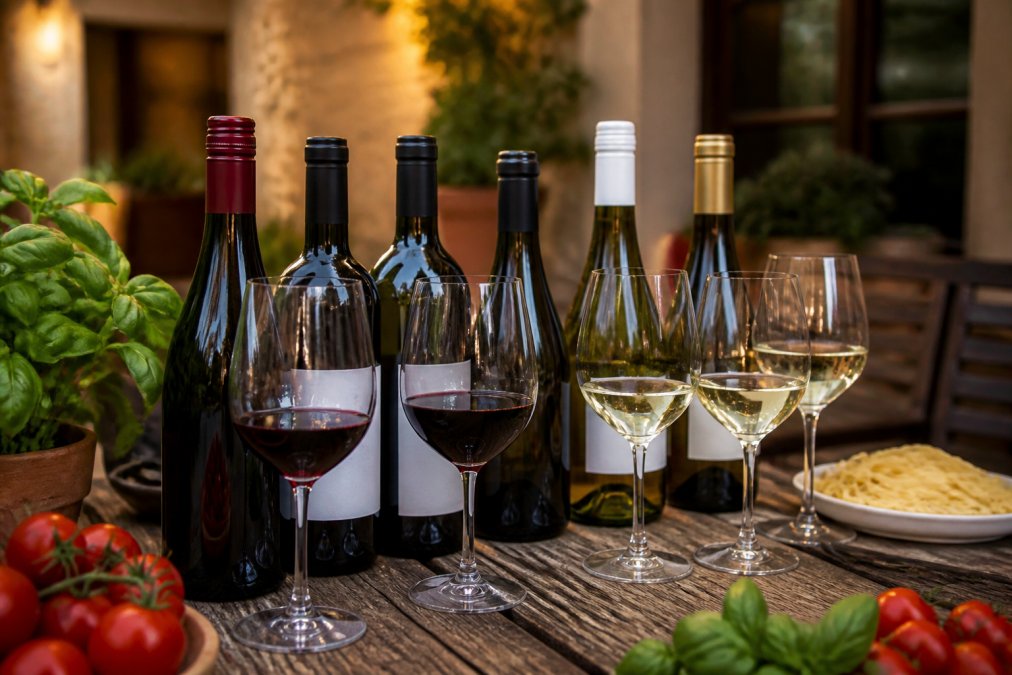
Best Australian Wines for Dinner Parties
Australian wines are built for casual entertaining. The climate produces ripe, generous fruit flavours that don’t require years of ageing to be approachable. This is precisely what you want for a dinner party where guests are focused on conversation and food, not dissecting a wine’s complexity.
Crowd-Pleasing Options Across Price Points
When you’re selecting wines for a casual dinner party, accessibility matters. Your guests should feel comfortable drinking what you’ve chosen, not intimidated by it.
Sauvignon Blanc is the entry-level white that consistently delivers. At around $15 AUD for a solid bottle, it’s affordable enough to buy multiple bottles without guilt. Australian Sauvignon Blancs tend toward tropical fruit and herbaceous notes (Sauvignon Blanc – Cool-climate classic).
Pinot Noir in the $20 to $30 AUD range represents genuine value. Australian producers have refined their Pinot Noir technique over the past decade, and the quality at this price point is remarkable. The wines are fruit-forward, low in aggressive tannins, and genuinely food-friendly.
Chardonnay offers versatility across price points. A $18 to $25 AUD bottle from a reliable Australian producer works with everything from seafood to roasted chicken. The key is checking the tasting notes, some Australian Chardonnays are heavily oaked and buttery, while others are mineral-driven and restrained. For casual entertaining, the lighter styles tend to pair more broadly.
Late Harvest Riesling is the wildcard for dessert or spicy courses. At around $25 AUD, it’s a step up in price but delivers genuine wow factor. The sweetness balances heat beautifully, and the high acidity prevents the wine from feeling cloying. If your menu includes any spice or you’re serving dessert, this is worth considering.
When selecting specific bottles for the best wine pairings for casual dinner parties, look for producers with strong distribution across Sydney bottle shops. Consistency matters more than hunting for obscure labels. A wine you can reliably find and repurchase is more valuable for entertaining than a one-off discovery that disappears from shelves.
Matching Wines to Your Menu Structure
The structure of your menu determines how many wines you need and in what order you serve them. A casual dinner party doesn’t require the formality of wine service at fine dining establishments, but the logic remains the same: lighter wines before heavier ones, white before red, dry before sweet.
Aperitif and Starter Wines
Begin with something celebratory and low-alcohol. Sparkling wine or Prosecco sets a festive tone without overwhelming the palate before food arrives. If you’re serving cured meats, cheeses, or light antipasti as starters, a dry sparkling option is ideal. Codornú Cava or a similar Spanish sparkling wine is affordable and appropriate. Alternatively, a crisp Sauvignon Blanc works if your starters lean toward vegetable-based dishes or seafood.
The key at this stage is refreshment.
Main Course Selection
This is where your primary wine choice matters. If your main course is seafood or light pasta, commit to a white wine for the entire course. If it’s meat-based, commit to a red. Switching wines mid-course is fine for formal dining, but it complicates casual entertaining.
Dessert and After-Dinner Options
Dessert wines are optional at casual gatherings, but they elevate the experience if the meal is substantial. A Late Harvest Riesling or similar sweet wine complements dessert without requiring a separate purchase of dessert itself. If you’re serving rich chocolate desserts, a slightly sweet wine balances the intensity.
Common Mistakes to Avoid When Selecting Wines
The most frequent error is overthinking the pairing. A decent wine that’s available and affordable beats an expensive bottle you’ve agonised over. Your guests care far more about the food and the company than the wine’s provenance.
Elevating Your Dinner Party with Professional Catering
If wine pairing feels daunting, consider that it’s only one element of a successful dinner party. The food itself is what truly determines whether guests remember the evening fondly.
Frequently Asked Questions
What are the best crowd-pleasing wines for a casual dinner party?
Pinot Noir and Sauvignon Blanc are reliable choices that appeal to most guests. Pinot Noir works with both meat and vegetables due to its lower tannin structure, whilst Sauvignon Blanc’s crisp acidity pairs well with seafood and lighter dishes. For sparkling options, Codornú Cava offers an affordable, widely available choice for welcome drinks.
How much wine per person should I serve at a dinner party?
Plan for approximately 150-200 ml of wine per person for a three-course dinner lasting 2-3 hours. A standard 750 ml bottle serves five glasses, so for ten guests across three courses, you’ll need 4-5 bottles total. Always stock extra to avoid running short.
How do I pair wine with Italian-style home-cooked meals?
Match the wine to the sauce and protein, not just the pasta. Cream-based sauces pair well with unoaked Chardonnay, whilst tomato-based dishes suit Sauvignon Blanc or lighter reds like Pinot Noir. For meat-heavy pasta dishes such as ragu or bolognese, choose Cabernet Sauvignon or a medium-bodied red. Seafood pasta benefits from Albariño or crisp white wines. The key is balancing acidity and body with the dish’s richness.
Should I serve Australian or international wines for a casual dinner party?
Australian wines are excellent choices for casual dinner parties and are widely available at competitive prices. Sauvignon Blanc, Pinot Noir, and Chardonnay from Australian producers offer consistent quality and food-friendliness. International options like Spanish Cava or French Burgundy add prestige but at a higher cost. For most casual gatherings, Australian wines deliver exceptional value and are familiar to guests, making them a practical choice without sacrificing quality.