


Table of Contents
- Why Private Chef Liability and Insurance Matter
- Types of Insurance Coverage for Private Chefs
- NSW Food Authority Requirements for Home-Based Catering
- Private Chef Food Allergy Protocols and Risk Management
- Private Chef Service Contract Template Essentials
- Choosing the Right Insurance Provider
- Frequently Asked Questions
Last Updated: September 24, 2026
Understanding private chef liability and insurance is essential if you operate a catering business or provide personal culinary services in Sydney. Private chef liability insurance protects you financially when accidents happen, whether a guest suffers food poisoning, slips in your client’s kitchen, or property damage occurs during service. Without proper coverage, a single incident could expose you to legal claims that devastate your business.
At The Italian Table, we’ve spent over 25 years refining our craft. This guide breaks down the insurance landscape, regulatory requirements, and practical safeguards every private chef in Sydney needs to understand.
Why Private Chef Liability and Insurance Matter
Running a private catering operation means working in unfamiliar kitchens, handling food for guests with unknown dietary restrictions, and managing liability in spaces you don’t control. A slip on a freshly mopped floor, cross-contamination that triggers an allergic reaction, or a guest who claims food poisoning weeks later can result in expensive legal battles and compensation claims.
Private chef liability insurance isn’t just sensible protection, it’s often a legal requirement when working with corporate clients or handling events through third-party platforms. Many venues and event planners won’t book you without proof of coverage. Beyond compliance, insurance gives you peace of mind and demonstrates professionalism to clients.
The real cost of operating without insurance isn’t just the premium you’d pay. It’s the risk of losing everything if something goes wrong.
Types of Insurance Coverage for Private Chefs
Different insurance products protect different aspects of your business. Understanding which coverage applies to your operation prevents gaps that could leave you exposed.
Public Liability Insurance
Public liability insurance covers injury to guests or damage to property that occurs during your service. If a guest slips on a wet floor in your client’s kitchen and breaks their arm, or you accidentally damage expensive artwork while moving through the home, this coverage protects you.
Coverage typically includes legal defence costs and compensation claims up to a specified limit. Most insurers offer flexible coverage options, commonly $1 million, $2 million, or $5 million in liability limits. The appropriate limit depends on your client base. Corporate events and high-end private functions warrant higher limits than intimate dinner parties.
Products Liability Insurance
This coverage protects you if a guest becomes ill or injured because of food you prepared. Food poisoning claims, allergic reactions, or contamination incidents fall under products liability. Even if you follow all food safety protocols, a claim can still be filed, and legal costs mount quickly.
Products liability is particularly important in Sydney’s competitive private chef market, where clients often have high expectations and may pursue claims more readily. This coverage is sometimes bundled with public liability but can also be purchased separately.
Professional Indemnity Insurance
If you offer consulting services, menu planning, dietary advice, or event coordination beyond cooking, professional indemnity insurance protects you. This coverage applies to claims arising from professional advice or services you provide, not just the food itself.
For private chefs who also offer services like meal planning consultations or catering design advice, this layer of protection prevents exposure if a client claims your recommendation caused them harm or financial loss.
NSW Food Authority Requirements for Home-Based Catering
Operating a home-based catering business in NSW involves compliance with food safety regulations. The NSW Food Authority sets standards for food handling, preparation, and storage that apply to private chefs and caterers.
Home-based food businesses must register with the NSW Food Authority and comply with the Food Standards Code. Your operation must maintain proper temperature control, hygiene standards, and traceability for all ingredients.
Insurance alone doesn’t satisfy these regulatory requirements. You must understand what foods you’re legally permitted to prepare in a domestic setting versus what requires a commercial kitchen.
The NSW Food Authority provides guidance on home-based catering rules. Compliance reduces your liability exposure significantly, if you follow all regulations and an incident still occurs, your insurance claim is much stronger.
Private Chef Food Allergy Protocols and Risk Management
Food allergies represent one of the highest-risk scenarios for private chefs. A severe allergic reaction can occur within minutes, and the consequences are serious. Implementing strong allergy protocols isn’t optional, it’s essential risk management.
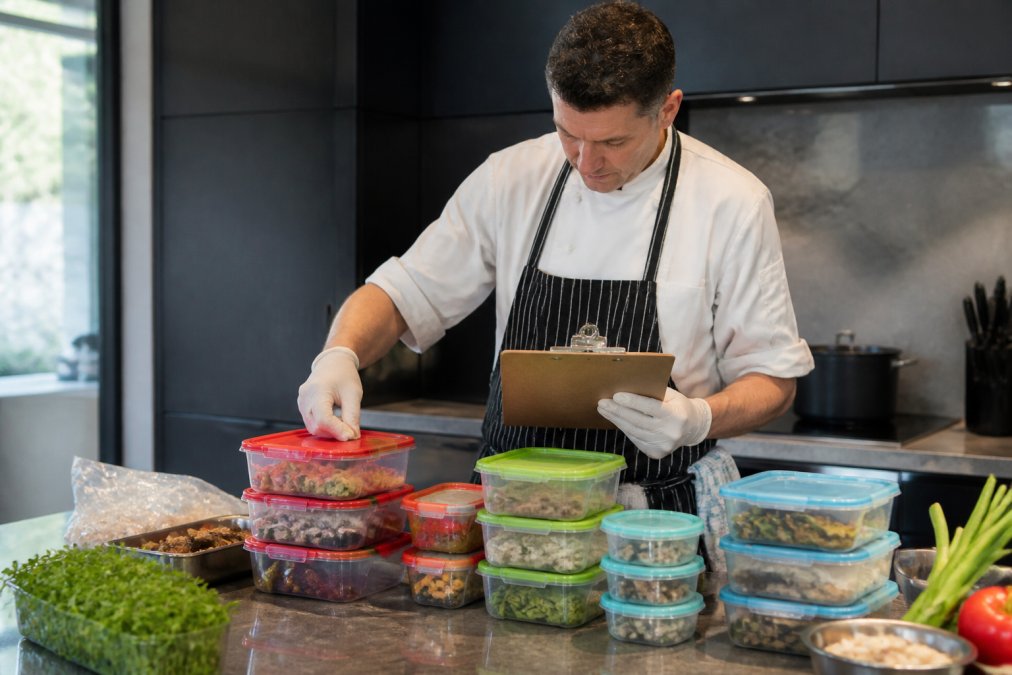
Start by asking clients about allergies and dietary restrictions during the booking consultation. Get specific details: not just “nut allergy,” but which nuts, severity level, and whether cross-contamination is a concern. Document everything in writing.
During preparation, maintain separate workspaces for allergen-free dishes. Use dedicated utensils, cutting boards, and preparation areas. Label all dishes clearly, both during preparation and at service. Many private chefs use colour-coded containers or labels to identify allergen-free plates.
At service time, verbally confirm each guest’s dietary requirements before plating. Never assume. A common mistake is treating allergies casually or assuming a guest will speak up if something is wrong. Instead, treat every allergy as potentially life-threatening.
Keep emergency contact information for all guests. If a severe reaction occurs, you need to act quickly. Having the guest’s emergency contact and knowing whether they carry an EpiPen can be the difference between a managed situation and a tragedy.
A single allergic reaction claim can result in six-figure legal costs and compensation. Even if you’re not found liable, defending yourself is expensive. Allergy protocols combined with products liability insurance are your dual protection.
Private Chef Service Contract Template Essentials
A clear service contract protects both you and your clients. It sets expectations, defines scope, and clarifies liability boundaries. Many disputes arise simply because client expectations weren’t documented.
Your contract should include:
- Scope of service: What you’ll prepare, number of guests, menu details, and timeline
- Dietary requirements and allergies: A detailed section where clients list all restrictions and confirm accuracy
- Payment terms: Total fee, deposit required, payment method, and cancellation policy
- Liability limitations: A clause stating you’re not liable for injuries or damage beyond your control, and that clients are responsible for maintaining safe premises
- Insurance and compliance: A statement that you maintain appropriate insurance and comply with food safety regulations
- Cancellation and rescheduling: Your policy for last-minute changes
- Assumption of risk: A clause where clients acknowledge the inherent risks of having a service provider in their home
A well-drafted contract doesn’t eliminate liability, but it clarifies responsibilities and demonstrates professionalism. Many disputes never reach court because a clear contract prevents misunderstandings from escalating.
Include a section requiring clients to disclose any hazards in their kitchen or home, loose rugs, slippery floors, pets, or unstable furniture. This documentation protects you if an injury occurs due to premises conditions you didn’t create.
Choosing the Right Insurance Provider
Several Australian insurers offer coverage tailored to private chefs and catering professionals. Your choice depends on your business structure, client base, and risk profile.
Chef Insurance (Australia) specialises exclusively in culinary professionals. They offer flexible liability coverage ($1 million, $2 million, or $5 million) and a three-tier membership structure based on business scale. Because they specialise in the industry, they understand the specific risks private chefs face and design policies accordingly. Contact them directly for membership pricing.
AAMI Business Insurance provides public and products liability coverage suitable for mobile food service providers. They’re a major Australian insurer with 24/7 claims support and the ability to bundle coverage with equipment protection. Their online portal makes policy adjustments straightforward. Request a quote to understand pricing for your specific operation.
GIO Business Insurance specialises in sole traders and small business operators. They offer public liability coverage up to $20 million and include legal costs coverage. Their flexible payment options and tailored cover for mobile service businesses make them a practical choice for private chefs operating independently.
CGU Insurance brings specialised hospitality expertise. They cover personal injury, property damage, and products liability for food-borne illness claims. Their risk management resources help you identify and mitigate threats before they become claims.
Allianz Australia Business Insurance offers comprehensive solutions including professional indemnity for chefs who offer consulting services. Their wide range of products allows you to scale coverage as your business grows.
When comparing providers, ask these questions: Do they understand home-based catering versus commercial kitchens? Can they cover your specific service model? What’s included in the premium, legal defence, claims management, risk resources? How quickly do they process claims?
Get quotes from at least three providers. The cheapest option isn’t always the best, you need a provider who understands your business and responds quickly when you need them.
Private chef liability insurance isn’t a luxury, it’s the foundation of a sustainable catering business.
Frequently Asked Questions
Do private chefs in Australia need public liability insurance?
Yes. Public liability insurance is essential for private chefs in Australia. It protects you and your clients if someone is injured or property is damaged during your service. While not legally mandated by the NSW Food Authority, most private chefs carry it as standard protection. Many clients, particularly corporate hosts and event planners, will ask for proof of insurance before booking. Without it, you’re personally liable for all costs related to accidents or injuries.
What should a private chef service contract template include?
A private chef service contract should cover the event date, menu details, guest count, dietary requirements and allergies, payment terms, cancellation policy, and liability limitations. Include specifics about food preparation (fresh cooking on-site), kitchen access requirements, and what happens if you’re unable to attend. The contract should also outline your responsibilities regarding food safety and hygiene standards. Having a clear, written agreement protects both you and your clients and reduces misunderstandings.
What happens if a guest has an allergic reaction at a private chef event?
If a guest has an allergic reaction, immediate medical attention is the priority. Your products liability insurance should cover food-related injury claims, including allergic reactions. This is why having documented allergy protocols is critical, you need written records of which allergens were disclosed, how you managed cross-contamination, and what precautions you took. Always ask clients about allergies upfront, confirm details in writing, and keep ingredients clearly labelled and separated during preparation and service.
Does my home insurance cover a private chef service?
No. Standard home and contents insurance does not cover business activities like private chef services. You need separate business liability insurance to be protected. If someone is injured or property is damaged during your work, your personal home insurance will likely refuse the claim because it’s a commercial activity. Business liability insurance is affordable and essential, whether you’re operating from a home kitchen or a commercial space.