


Table of Contents
- Why Catering for Multiple Dietary Restrictions in Sydney Needs a Plan
- How to Collect Dietary Information for Events Without the Hassle
- The 5 Most Common Dietary Needs Sydney Hosts Encounter
- Managing Food Allergies at Work Events: A Corporate Guide
- Corporate Catering Sydney Dietary Requirements: What to Ask Your Caterer
- The Smart Approach: One Menu, Many Options
- Event Catering Checklist for Dietary Restrictions
- Conclusion: Stress-Free Catering for Every Guest
- Frequently Asked Questions
Last Updated: September 7, 2026
Planning an event where every guest can eat safely and enjoyably is one of the hardest parts of hosting in Sydney, and catering for multiple dietary restrictions sydney hosts face often becomes the deciding factor between a memorable evening and a stressful one. At The Italian Table, our chefs bring over 25 years of culinary expertise to every event, crafting menus that respect these needs without compromising on flavour. This guide covers how to collect dietary information efficiently, the most common restrictions you will encounter, and the exact questions to ask any caterer before you book.
The goal is simple: one event, many options, and zero guest anxiety. Below, we show you exactly how to structure your planning so dietary needs feel like a natural part of the menu rather than an afterthought. But first, here is what most guides get wrong: they treat dietary restrictions as a checklist problem, when the real challenge is communication and cross-contamination.
Why Catering for Multiple Dietary Restrictions in Sydney Needs a Plan
The biggest mistake hosts make is collecting dietary information too late, usually after the menu has been set. By then, you are asking caterers to retrofit solutions, which is where mistakes happen. A proper plan starts at least two weeks before your event, giving your caterer time to source specific ingredients and design a menu that genuinely serves everyone.
A plan matters because cross-contamination is invisible. A salad that looks vegan can be tossed with a spoon that touched a shellfish dish. A gluten-free pasta can be cooked in water shared with regular pasta. Professional caterers in Sydney who handle dietary restrictions daily build their kitchens around separation, but they need to know the risks in advance to do this properly.
Serving a guest with a severe allergy without confirming your caterer’s cross-contamination protocols is a genuine safety risk. Anaphylaxis can occur from trace amounts, so “just remove the nuts” is never an acceptable solution.
How to Collect Dietary Information for Events Without the Hassle
Collecting dietary information is a logistics exercise, not a personal one. The most efficient method is a simple digital form sent with your invitation, asking three questions: Do you have any food allergies? Do you have any dietary preferences (vegan, vegetarian, halal, kosher)? Do you have any intolerances or conditions such as coeliac disease?
Send the form early and set a clear deadline. For corporate events, follow up individually with anyone who has not responded, because a single unrecorded allergy can ruin an event. For intimate gatherings, a quick phone call works better than text, as guests often mention restrictions conversationally that they would not type out.
A common mistake is asking guests to “write any allergies here” and leaving it at that. Many people with mild intolerances will not volunteer the information unless specifically prompted. Structure your questions to distinguish between allergies, intolerances and preferences, because a caterer handles each very differently.
| Guest Type | What They Need | How to Ask |
|---|---|---|
| Allergy | Strict avoidance, no cross-contamination | “List all food allergies and severity” |
| Intolerance | Can often tolerate small amounts | “List any foods that cause discomfort” |
| Preference | Vegan, vegetarian, pescatarian | “Select your dietary style” |
| Medical condition | Coeliac, diabetes, autoimmune | “Any medically required dietary needs?” |
The 5 Most Common Dietary Needs Sydney Hosts Encounter
Sydney’s dining scene reflects its diverse population, and hosts regularly encounter five main categories of dietary requests. Understanding the difference between them is the foundation of catering for multiple dietary restrictions sydney events require.
Gluten-Free and Coeliac: What Actually Matters
Gluten-free is a preference for some and a medical necessity for others. Coeliac disease is an autoimmune condition where even trace amounts of gluten damage the small intestine (peer-reviewed research). For a coeliac guest, a dedicated gluten-free kitchen area and separate cooking utensils are non-negotiable.
What most hosts miss is that gluten hides in unexpected places: soy sauce, stock cubes, marinades and even some spices. When you brief your caterer, ask specifically about hidden gluten sources, not just obvious items like bread and pasta.
Vegan, Vegetarian and Plant-Based Requests
Vegan and vegetarian requests are the most common dietary preferences in Sydney, and they are also the easiest to accommodate well. The key is making plant-based dishes feel intentional rather than like a sad side plate. A proper caterer designs the vegan option as a hero dish, not an afterthought.
Food Allergies vs Intolerances: Know the Difference
A food allergy triggers an immune response and can be life-threatening, while an intolerance typically causes digestive discomfort. This distinction changes how a caterer operates. Allergies require strict segregation and often dedicated equipment, while intolerances may allow for more flexibility.
When a guest says they are “allergic” to something, always treat it as a true allergy. It is safer to over-prepare than to assume a guest is exaggerating a preference.
Managing Food Allergies at Work Events: A Corporate Guide
Corporate events carry extra responsibility because attendees may not know each other’s medical history, and the organiser is accountable. Managing food allergies at work events requires a documented approach: collect information in advance, share it with the caterer in writing, and label every dish clearly at the buffet or service point.
The risk in a corporate setting is cross-contact during self-service. A guest with a sesame allergy may use a spoon that touched a tahini dressing. The solution is either labelled individual portions or a dedicated server who knows the allergen map of every dish. Many Sydney offices now require caterers to provide ingredient lists for every item, which is a reasonable standard to demand.
For corporate catering, always confirm that your provider can produce a written allergen summary for each dish. If they cannot, that is a red flag. Professional caterers maintain this documentation as standard practice.
Corporate Catering Sydney Dietary Requirements: What to Ask Your Caterer
When evaluating corporate catering sydney dietary requirements, you need to ask specific questions before signing. The first question is not “can you do vegan?” but rather “how do you prevent cross-contamination in your kitchen?” The answer reveals whether dietary needs are a genuine capability or a marketing line.
Ask these five questions to every caterer:
- Do you have separate cooking equipment for gluten-free and allergen-free meals?
- Can you provide a written allergen breakdown for every dish on the menu?
- How do you label dishes at the event to prevent accidental consumption?
- What is your protocol if a guest has an anaphylactic reaction?
- Can you accommodate a guest with coeliac disease using a fully gluten-free preparation area?
The quality of the answers matters more than the speed. A caterer who hesitates or gives vague responses likely does not have strong systems in place. According to Food Standards Australia New Zealand allergen labelling requirements, food businesses must declare allergens on labels, which gives you a clear baseline for what to expect from professional providers.
The Smart Approach: One Menu, Many Options
The most elegant solution for dietary restrictions is not a separate menu for each guest, but a single menu designed with flexibility built in. This approach, sometimes called “modular catering,” structures dishes so that base components are dietary-neutral and customisation happens at the point of service.
For example, a pasta station where gluten-free pasta is cooked in dedicated water, and sauces are offered in separate pans, serves everyone without requiring three distinct menus. At The Italian Table, this philosophy guides our catering for multiple dietary restrictions Sydney clients request, because freshly cooked food can be adapted in ways that pre-prepared catering cannot. Our chefs cook to order at your event, ensuring that dishes like gluten-free pasta are prepared with care, not reheated from a shared batch.
This is where the National Allergy Strategy guidance for food service becomes essential reading for any host. It outlines best practices for food service businesses in Australia, and it is a useful benchmark when assessing whether your caterer takes allergies seriously.
Event Catering Checklist for Dietary Restrictions
Use this checklist when planning any event where guests have dietary needs. Work through it in order, starting two weeks before your event date.
- Send a dietary information form with your invitations
- Set a deadline for responses and chase non-responders
- Categorise responses: allergies, intolerances, preferences, medical conditions
- Share the full dietary summary with your caterer in writing
- Confirm your caterer’s cross-contamination protocols in writing
- Request a written allergen breakdown for every proposed dish
- Confirm how dishes will be labelled at the event
- Arrange for a dedicated server if guests will self-serve
- Brief your catering team on the day about specific guest needs
- Ask guests with severe allergies to confirm their meal when it arrives
Conclusion: Stress-Free Catering for Every Guest
Hosting a diverse group with multiple dietary restrictions in Sydney does not have to be overwhelming, but it does require a caterer who treats these needs as a core competency rather than a complication. The difference between a stressful event and a seamless one comes down to preparation, clear communication, and a kitchen that genuinely understands cross-contamination. At The Italian Table, our chefs bring over 25 years of experience to every event, cooking fresh on the day with no frozen or pre-prepared food, ensuring every guest receives a meal tailored to their needs. Whether you are hosting a corporate lunch or an intimate dinner party, enquire with us today and let our team handle the details while you enjoy your guests.
Frequently Asked Questions
How do you manage multiple dietary requirements at a corporate event?
Start by collecting dietary information from every guest before the event. Send a simple form or ask guests to note allergies when they RSVP. Share this list with your caterer early and ask how they prevent cross-contamination. A buffet with clearly labelled dishes works well, but a set menu with a dietary-friendly option for every course is safer for guests with allergies. Confirm the final plan with your caterer a few days before the event.
How to label food for dietary restrictions at events?
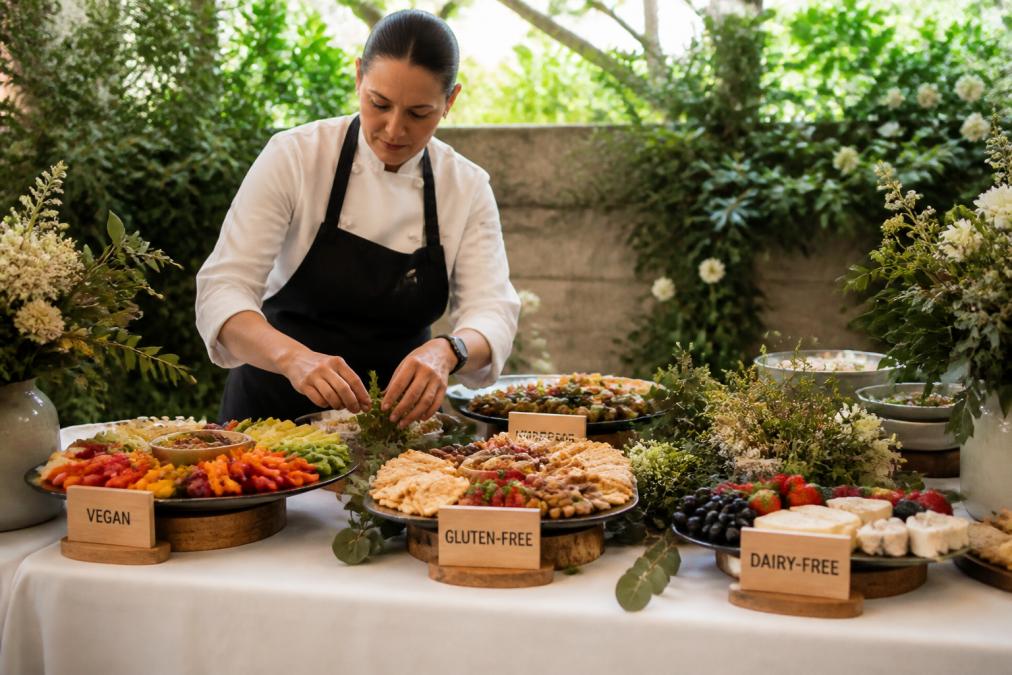
Label every dish with its name and the dietary categories it suits, such as vegan, gluten-free, dairy-free or contains nuts. Be specific about allergens rather than using vague terms like ‘may contain’. Place labels directly in front of each dish on the buffet. For plated menus, note dietary requirements on the guest’s place card or have the waitstaff confirm each plate before serving.
Is it better to have a separate menu or a universal dietary-friendly menu?
A universal menu that works for most guests is usually the better choice. When the base dishes are naturally gluten-free, vegan or nut-free, everyone eats the same food and no one feels singled out. Your caterer can add optional extras like a meat component for guests without restrictions. This approach reduces cross-contamination risk and simplifies service, which matters when you are catering for multiple dietary restrictions in Sydney.
What are the food safety standards for allergens in NSW?
Food businesses in NSW must follow the Australia New Zealand Food Standards Code. This requires caterers to provide accurate information about allergens in the food they serve. Staff should know what is in each dish and how to prevent cross-contamination. When you book a caterer, ask how they handle allergen risks, including separate preparation areas and equipment. A professional caterer will have clear procedures and trained staff to keep your guests safe.