


Table of Contents
- Why Plating Takeout Food for Guests Changes the Whole Evening
- What You’ll Need Before You Start Plating
- How to Make Takeaway Food Look Fancy Without Fuss
- Takeaway Food Presentation Ideas for Every Cuisine
- Easy Food Plating Techniques at Home
- How to Keep Takeaway Food Warm for Guests
- Common Mistakes to Avoid When Serving Takeout to Guests
- Conclusion: When a Private Chef Beats Takeout
- Frequently Asked Questions
Last Updated: October 6, 2026
Why Plating Takeout Food for Guests Changes the Whole Evening
Plating takeout food for guests is the fastest way to turn a casual takeaway order into something that feels like a proper dinner party. At At The Italian Table, we have spent years cooking for Sydney homes and offices, and we know the difference a plate makes. A shared container of pasta dumped on the table reads as “we ordered in.” The same food, split onto warm bowls and finished with a herb or a drizzle, reads as dinner.
That is the whole idea: how to plate takeout food for guests without pretending you cooked it. You are not faking anything. You are simply giving good food the setting it deserves.
Most hosts get this wrong because they treat the container as the finish line. It is not. Below, we break down exactly what you need, how to plate it fast, and how to keep everything hot while you do it.
What You’ll Need Before You Start Plating
Start with the right kit and the plating takes minutes, not half an hour. You do not need restaurant equipment. You need a few items that most kitchens already have.
The goal is speed and warmth. Cold plates kill hot food faster than anything else, so plan your setup before the food arrives.
Plates, Boards, and Bowls That Work
- Warm ceramic bowls for pasta, curries, and anything saucy
- Large flat plates for proteins, pizza, and grilled dishes
- Wooden boards for shared platters and grazing
- Small ramekins for sauces, dips, and pickles
- Linen napkins to line baskets and add colour
Avoid paper plates for a sit-down meal. They undercut the effort you are making.
Tools That Make Plating Faster
- Tongs for moving proteins without piercing them
- A spoon and a small ladle for sauces
- Kitchen scissors for cutting through lids and packaging
- A microplane or fine grater for parmesan and zest
- A clean cloth to wipe plate rims before serving
Warm your bowls in a low oven for a few minutes before the food lands. Hot food on a hot bowl stays hot through the first course, which is the single biggest complaint guests raise about takeaway at home.
How to Make Takeaway Food Look Fancy Without Fuss
Making takeaway food look fancy comes down to three moves: decant, garnish, and space. Do those three things and almost any dish lifts.
First, decant. Get the food out of its container and onto real serveware. This one step does more than everything else combined.
Next, garnish. A scatter of fresh herbs, a squeeze of lemon, a crack of pepper, or a drizzle of good oil adds colour and life.
Then, space. Do not crowd the plate. Leave a clean rim. Empty space makes food look intentional rather than piled.
- Add height with a small stack rather than a flat spread
- Use contrasting colours: green herbs on red sauce, white cheese on dark greens
- Wipe the rim of every plate before it leaves the kitchen
- Serve sauces on the side in small bowls
None of this takes skill. It takes two extra minutes and a willingness to move food off the plastic.
Takeaway Food Presentation Ideas for Every Cuisine
Different cuisines suit different plating. Match the serveware and garnish to the food’s origin and it will always look considered.
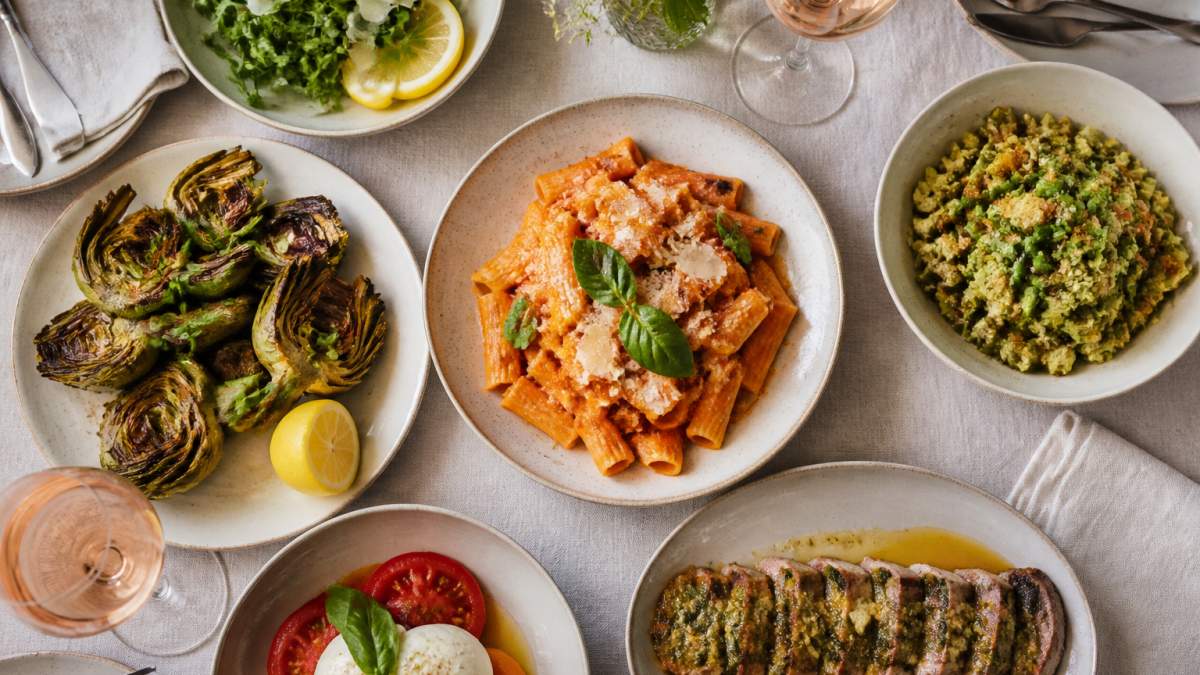
Italian and Mediterranean Spreads
Italian food is the easiest to plate well because it already looks generous. Warm bowls for pasta, a wooden board for antipasti, and a drizzle of olive oil finish the job.
- Torn basil over pasta rather than chopped
- A block of parmesan with a small grater on the board
- Olives and cured meats arranged in loose folds, not flat slices
- Lemon wedges on the side for seafood and grilled dishes
Asian and Shared-Plate Dishes
Shared dishes work best on one large platter or several small ones. Keep sauces separate so guests can build their own bowls.
- Rice in a shallow bowl, not packed tight
- Noodles lifted with tongs to give them height
- Spring onions, sesame, and chilli sliced fresh on top
- Small bowls of soy, vinegar, and chilli oil for the table
Easy Food Plating Techniques at Home
Easy food plating techniques at home come down to a few repeatable habits. Learn four and you can plate anything.
- The clock method: place protein at 6 o’clock, starch at 2, vegetables at 10
- The swoosh: drag a spoon of sauce across the plate, then sit the food on it
- The stack: layer three elements upward for height
- The scatter: drop garnish loosely rather than placing it in a neat pile
Practise on a plain white plate first. It shows every mistake, which makes it the best teacher.
The single habit that lifts home plating fastest is wiping the plate rim. A clean edge tells the eye the dish was finished on purpose, and it takes two seconds per plate.
How to Keep Takeaway Food Warm for Guests
Keeping takeaway food warm for guests is about timing, not equipment. Most food loses heat in the gap between delivery and serving, so close that gap.
- Warm your plates and bowls before the food arrives
- Turn the oven to its lowest setting and hold dishes there, covered
- Keep sauces in a thermos or a warm jug
- Serve in courses rather than all at once
- Ask guests to sit before you plate the final dish
If you are plating a large spread, work in batches. Plate the hot dishes first, then the cold sides. Never let a hot main sit on the bench while you arrange a salad.
Common Mistakes to Avoid When Serving Takeout to Guests
A few mistakes undo all your effort. Avoid these and your table will look far better than the effort suggests.
- Serving food in the delivery containers
- Using cold plates for hot food
- Overcrowding the plate with no clean rim
- Leaving plastic bags and packaging visible on the table
- Plating everything at once so half of it goes cold
Do not plate more than you can serve within a few minutes. A beautifully arranged dish that sits for fifteen minutes arrives lukewarm, and guests notice temperature long before they notice presentation.
Conclusion: When a Private Chef Beats Takeout
Plating takeout food for guests works well for a relaxed night in, and the techniques above will carry you far. But there is a ceiling to how good reheated food can look and taste. When the occasion matters, that ceiling shows.
For milestone birthdays, corporate lunches, and intimate dinners across Sydney and wider NSW, At The Italian Table brings a private chef to your home or workplace. We cook fresh on the day, never frozen, with over 25 years of culinary experience and a menu tailored to your guests, including dietary needs. You get restaurant-quality dining without leaving the house.
Enquire now to plan your next gathering, and let us handle the details while you enjoy your guests.
Frequently Asked Questions
Should you remove takeaway food from its packaging before serving?
Yes, transferring takeout to your own plates makes the biggest visual difference. Decant curries into shallow bowls, arrange proteins on warm plates, and tip sauces into small jugs. Keep the containers out of sight in the kitchen. This single step turns a collection of foil trays into a proper table spread, and it lets you garnish each dish before it reaches your guests.
How do you keep takeaway food warm while hosting?
Warm your plates in a low oven before serving, and hold dishes in a 60°C oven (covered with foil) if your guests are arriving in stages. Insulated bags keep containers hot during transport, and a tea towel over a serving board traps heat at the table. Avoid microwaving everything at once, as reheated dishes cool quickly and lose texture.
What plates and serving dishes work best for takeout food?
Choose wide, shallow bowls for saucy dishes and flat plates for proteins and sides. Neutral white or matte ceramic lets the food colour stand out. Wooden boards suit shared antipasti, and small ramekins hold dips and condiments neatly. Avoid overcrowding: leave a generous rim on each plate so the presentation reads as intentional rather than piled up.
How do you plate takeout food without making it look messy?
Wipe plate rims with a damp cloth after plating, use a spoon to place sauces rather than pouring, and build height with a small mound in the centre. Group odd numbers of items (three arancini, five prawns) and add one garnish: fresh herbs, a lemon wedge, or a drizzle of oil. These easy food plating techniques at home take under a minute per plate.