


Table of Contents
- What Makes a Candlelit Dinner Truly Special
- Romantic Dinner Ideas at Home That Impress
- How to Host a Dinner Party at Home: The Complete Setup
- Menu Planning for Your Candlelit Dinner
- Why a Private Chef in Sydney Transforms Your Candlelit Dinner
- Common Mistakes That Ruin the Evening
- Frequently Asked Questions
Last Updated: September 18, 2026
What Makes a Candlelit Dinner Truly Special
A candlelit dinner transforms an ordinary meal into an experience that lingers in memory long after the last course. The magic isn’t just about the candles, it’s the deliberate act of slowing down, creating intimacy, and removing distractions that make this format so powerful.
What separates a forgettable dinner from one people talk about for years? It’s rarely the food alone. It’s the combination of thoughtful lighting, intentional pacing, and an environment designed specifically for connection. When you host a candlelit dinner at home, you control every element that restaurants charge premium prices to orchestrate.
At The Italian Table, we’ve spent over 25 years crafting these moments for Sydney homeowners and corporate hosts. The most memorable candlelit dinners we’ve facilitated share a common thread: they prioritise atmosphere as seriously as cuisine. The host understands that a candlelit dinner isn’t about showing off, it’s about creating space for genuine conversation and presence.
The candles themselves matter, but not for the reasons you might think. They’re not decoration. They’re a signal to your guests that this evening operates by different rules than a typical weeknight. The warm, flickering light naturally softens faces, makes everyone look better, and creates an environment where people instinctively lower their voices and lean in closer.
Temperature, music selection, and table flow matter equally. A candlelit dinner that’s too cold or too loud fails regardless of how beautiful the table looks. These details separate an Instagram-worthy setup from an experience that actually feels special.
Romantic Dinner Ideas at Home That Impress
The best romantic dinner ideas at home share one characteristic: they’re personal. A candlelit dinner planned around your partner’s preferences will always outperform generic “romantic dinner” templates you find online.
Start by considering what makes your guest or partner feel seen. For some people, that’s a cuisine they’ve mentioned wanting to try. For others, it’s recreating a meal from a meaningful memory. For many, it’s simply knowing that effort went into planning something just for them.
A candlelit dinner doesn’t require complexity. Some of the most memorable versions we’ve seen involved straightforward dishes executed with precision. A perfectly seared fish fillet, seasonal vegetables prepared simply, and quality wine selected thoughtfully will outshine an ambitious menu executed poorly.
Consider the progression. A candlelit dinner flows better when courses arrive with intention rather than all at once. The anticipation between courses gives conversation room to breathe. If you’re cooking yourself, prepare as much as possible beforehand so you’re not stressed during the meal. If you’re hosting multiple guests, a candlelit dinner menu with elements you can prepare ahead reduces your anxiety and improves your presence at the table.
The details people remember aren’t usually the main dish. They remember whether you asked about dietary preferences. They remember if you’d thought about which wine to serve. They remember if the table felt intentional rather than hastily arranged. A candlelit dinner at home succeeds because you’ve had time to think about what matters to your guests.
How to Host a Dinner Party at Home: The Complete Setup
Hosting a dinner party at home requires attention to three interconnected systems: the physical table environment, the sensory experience, and the logistics of service and pacing.
Table Setting and Lighting
The table is where your candlelit dinner begins. A well-set table signals to guests that this meal is intentional and that their presence matters.
Start with linens. A tablecloth or runners in neutral tones create a foundation. White, cream, or soft grey work universally and let your candles and centrepiece draw attention. Avoid overly patterned fabrics that compete with the candlelight.
Placement matters more than most people realise. Each place setting should include a charger plate (the large decorative plate underneath), a dinner plate, a bread plate to the upper left, and glasses positioned above the knife. Napkins folded simply on the plate or to the left of the fork. Silverware follows the outside-in rule: utensils used first sit furthest from the plate.
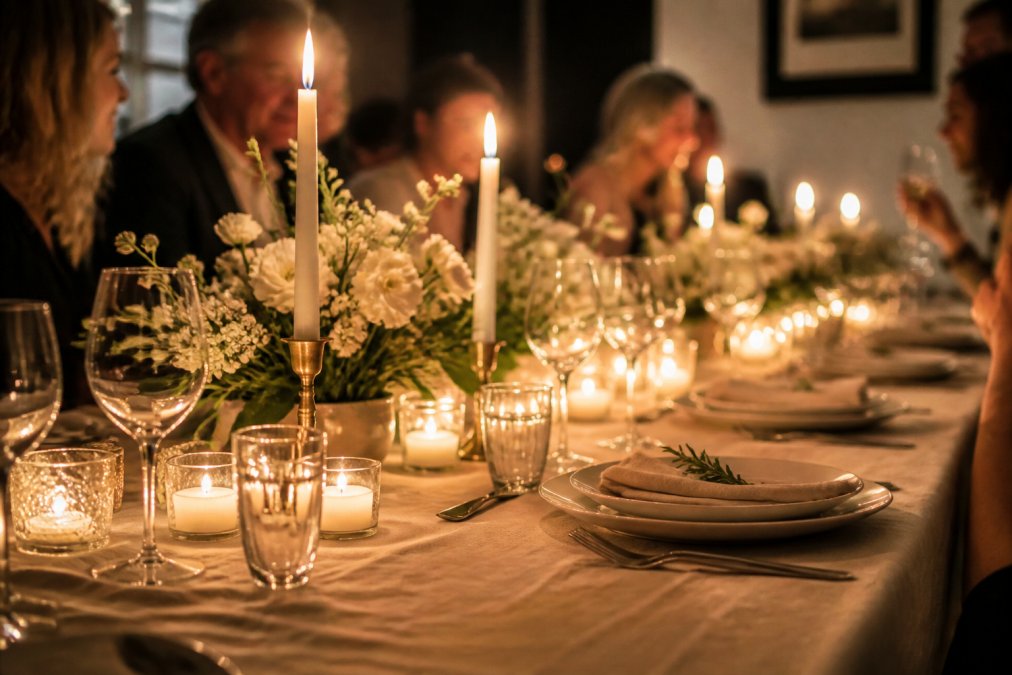
Candles are the centrepiece of your candlelit dinner setup. Use multiple candles of varying heights rather than one central display. This creates depth and ensures light reaches all parts of the table. Unscented or lightly scented candles work best, strong fragrances compete with food aromas. Place candles low enough that guests can see each other across the table without peering around flames.
Fresh flowers or greenery add visual interest without overwhelming the space. A simple arrangement in the table’s centre, or small sprigs at each place setting, works better than an elaborate floral display. The goal is elegance, not distraction.
Music, Temperature, and Flow
A candlelit dinner fails if the room is cold or the silence is awkward. These sensory elements demand as much planning as the food.
Music should be barely noticeable, something that fills space without demanding attention. Instrumental playlists, jazz standards, or classical pieces work well. Volume should allow conversation without anyone raising their voice. Test your music choice beforehand to ensure it matches the mood you’re creating. A candlelit dinner with upbeat pop music sends a different message than one with soft classical arrangements.
Temperature control often gets overlooked. A room that’s too cool makes guests uncomfortable; too warm becomes stuffy. Aim for 20-21 degrees Celsius. If you’re serving warm courses, the room will naturally warm slightly as the meal progresses. Open a window slightly if needed to maintain air circulation without creating draughts.
Pacing determines whether a candlelit dinner feels rushed or luxurious. Plan for 2-3 hours minimum. Serve courses with 15-20 minute intervals. This gives guests time to finish eating, conversation to develop, and you time to prepare the next course without stress. Rushing between courses creates tension that guests feel immediately.
Clear between courses. Remove plates when everyone has finished, not when the first person finishes. This small act of consideration demonstrates that you’re thinking about the collective experience, not individual timing.
Menu Planning for Your Candlelit Dinner
A candlelit dinner menu should balance ambition with your actual cooking ability. The best menus are ones you can execute calmly while remaining present with your guests.
Start with a simple principle: choose dishes where you can prepare most elements ahead. A candlelit dinner where the host is stressed in the kitchen contradicts the entire purpose of the evening.
Consider a three-course structure: a light starter that can be plated in advance, a main course where the protein is the focus and vegetables are prepared ahead, and a simple dessert. This structure works because it gives you natural breaks to reset and be present.
Seasonal ingredients make menu planning easier. A candlelit dinner built around what’s fresh and available locally will taste better and require less manipulation. Spring vegetables, summer berries, autumn squash, and winter greens each suggest natural menus.
Wine pairing elevates a candlelit dinner without requiring expertise. A single quality red and a single quality white covers most preferences. Choose wines you enjoy drinking, your confidence in the selection matters more than perfect technical matching.
Dietary requirements deserve serious attention. A candlelit dinner where one guest can’t eat most of the menu undermines the entire purpose. Ask about preferences early and build flexibility into your menu. A main course with protein, starch, and vegetables allows easy modification for vegan or gluten-free guests.
Why a Private Chef in Sydney Transforms Your Candlelit Dinner
A private chef in Sydney brings professional execution to your candlelit dinner without removing the personal element that makes hosting at home meaningful.
The difference between a private chef service and standard catering is significant.
Common Mistakes That Ruin the Evening
Most candlelit dinner failures aren’t about the food. They’re about the details people overlook until it’s too late.
| Element | Focus | Impact |
|---|---|---|
| Candlelight | Multiple candles, varying heights | Creates intimacy and flatters guests |
| Table setting | Quality linens, proper placement | Signals intentionality and care |
| Pacing | 2-3 hours, 15-20 min between courses | Allows conversation and presence |
| Music | Soft instrumental, barely noticeable | Fills silence without distraction |
| Temperature | 20-21°C with air circulation | Ensures guest comfort throughout |
| Menu | Prepared-ahead dishes, seasonal ingredients | Reduces host stress, improves execution |
A candlelit dinner succeeds when you’ve prepared so thoroughly that you can be fully present during the meal. Every detail you handle beforehand, table setting, menu prep, lighting, music, is an investment in being able to actually enjoy your guests rather than manage logistics.
Frequently Asked Questions
How can I set up a candlelit dinner at home without professional help?
Focus on three essentials: proper lighting (real candles rather than electric), a clean and thoughtfully arranged table, and a simple menu you can prepare ahead. Set the table 2-3 hours before guests arrive, chill wine beforehand, and prepare any cold components in advance. Dim overhead lights and rely entirely on candlelight for atmosphere. The key is preparation, less stress during the evening means you can actually enjoy your guests.
What’s the difference between hosting a candlelit dinner yourself and hiring a private chef in Sydney?
Hosting yourself gives you full control but demands your time and energy in the kitchen, limiting your presence with guests. A private chef handles all cooking, plating, and service in your own space, allowing you to focus entirely on your guests. They also bring professional technique, dietary expertise, and a polished presentation that’s difficult to replicate at home. For milestone celebrations or when you want to truly relax, a private chef removes the stress entirely.
How far in advance should I plan a candlelit dinner party?
Ideally, plan 2-3 weeks ahead if you’re handling it yourself, giving time to source ingredients and prepare components. If hiring a private chef, confirm availability as early as possible, though some can accommodate shorter notice depending on their schedule. Send invitations 10-14 days before the event so guests can commit. The earlier you plan, the more options you have for menus and the less last-minute stress you’ll experience.
Can a private chef work in a small kitchen for a candlelit dinner?
Yes. Professional chefs are experienced in working within space constraints and can plan menus that don’t require extensive bench or stove time. They bring their own equipment if needed and work efficiently in compact kitchens. When booking, mention your kitchen size upfront so the chef can tailor their approach. Many Sydney homes have modest kitchens, and experienced private chefs design their service around your actual space.